
Introduction
India’s electric vehicle industry is expanding beyond personal transportation, creating new opportunities in commercial mobility, last-mile delivery, EV rentals, and fleet management. Government initiatives, technological advancements, and changing transportation economics are contributing to EV industry growth in India.
This article explores seven major growth drivers, current market developments, challenges, and the industry’s potential outlook through 2030.
But what is driving the growth of the EV industry? And what can we expect from the EV market in the coming years?
Let’s have a look at the seven major factors underpinning the current growth in India’s EV industry:
Current Scenario of India’s EV Industry
India has seen strong growth in its EV industry over recent years. Two- and three-wheelers have been especially prominent, as they can easily be used for local transport and last-mile delivery.
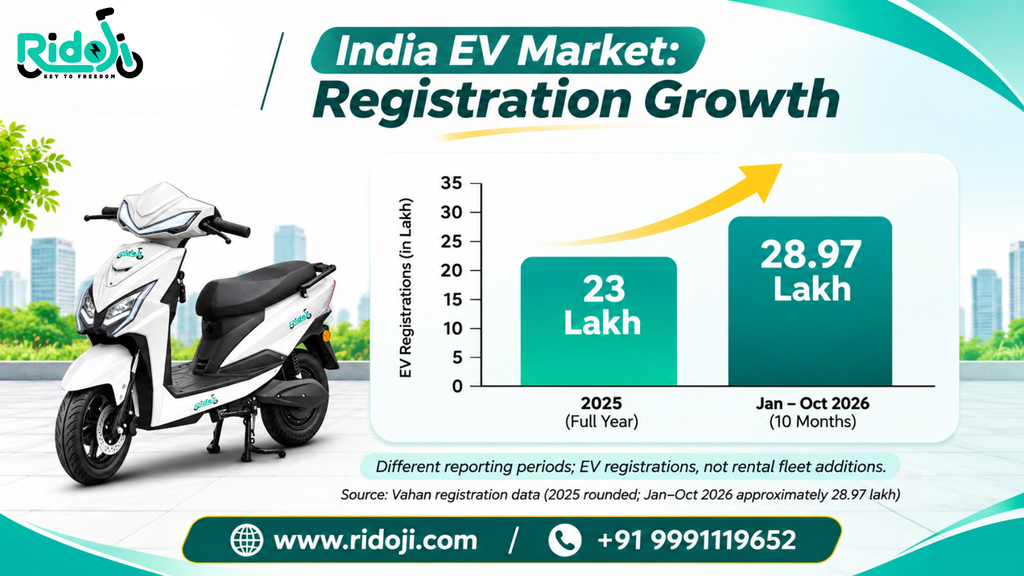
According to the Vahan portal, around 23 lakh EVs were registered in India in 2025. Electric two-wheelers contributed approximately 12.8 lakh units, while electric three-wheelers accounted for around 8 lakh units.
Further growth was recorded in 2026. Between January and October 2026, there were around 28.95 lakh EV registrations. This showed a 51.2% increase in 2025. Approximately 17.98 lakh of these registrations are related to two-wheelers. (Source: Vehicle Stats India)
Whilst it is evident that the EV industry is experiencing growth in India, the rise differs for different types of vehicles and by region. Further, the industry still needs to overcome issues relating to EV charging and battery prices.
Evolution of India’s EV Industry
India has seen major growth in the EV industry. Initially, the main forms of EV were small electric mobility devices and electric rickshaws. Subsequently, consumers began to see electric two-wheelers and passenger and commercial vehicles.
Alongside government support, innovation in batteries and the involvement of new vehicle manufacturers have aided industry growth. Furthermore, the provision of EV charging points and a broadening range of EVs have helped make EVs available to more people.
Beyond personal EV ownership, companies are seeking to establish electric vehicle fleets for uses such as delivering goods, staff transport, and rental.
7 Key Factors Influencing Growth in India’s EV Industry
1. Rising Fuel Prices
High petrol and diesel prices are a crucial element in driving interest in EVs. For example, individuals, especially those working in sectors such as delivery and commercial transport, will often incur considerable expenditure on fuel.
Businesses can further optimize their commercial vehicle operations through EV fleet management, which helps coordinate vehicle deployment, maintenance, operational expenses, and fleet utilization.
As an alternative to traditional vehicles, EVs are powered by electricity. Depending on electricity rates and vehicle efficiency, they can be cheaper to power on a per-kilometer basis.
A petrol-versus-electric scooter running-cost example.
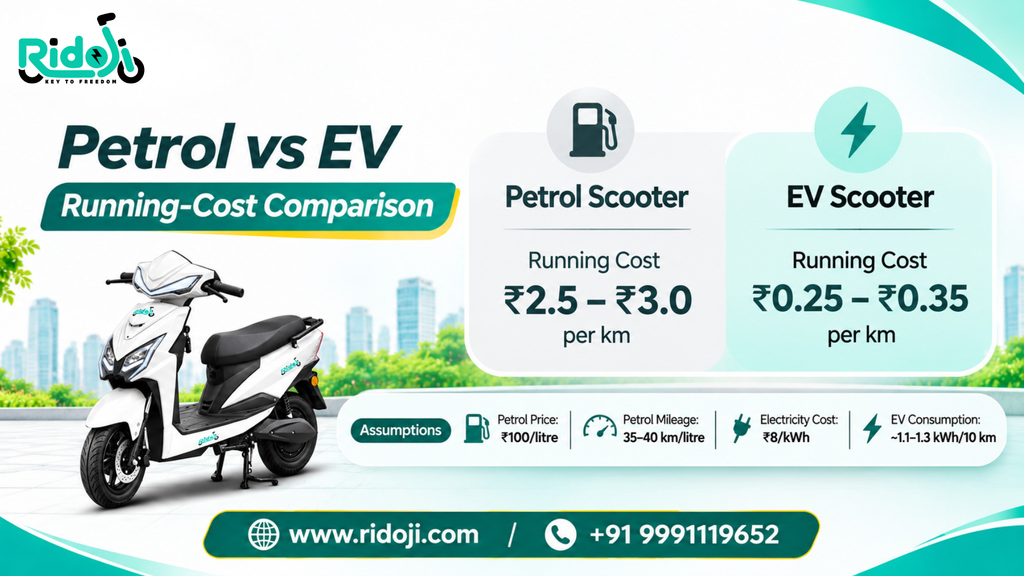
Such cost benefits can be particularly valuable for companies that must undertake extensive transport each day. Consequently, delivery, rental, and logistics firms are investigating the potential of EVs to control transport expenditure.
2. Government Support
Government support has been a key element in supporting growth within the Indian EV industry. Government backing has been shown effectively in the provision of incentives, alongside support for EV manufacturers and for charging point provision.
A key scheme in this regard is the PM E-DRIVE Scheme, which was developed to boost uptake of and provision of charging points for EVs. The scheme also seeks to strengthen the domestic EV production environment.
According to the Press Information Bureau’s PM E-DRIVE factsheet, the scheme has a revised financial outlay of ₹11,900 crore and runs until March 2028, subject to category-specific eligibility conditions and deadlines.
Across a range of vehicle sub-sectors, the scheme offers support for charging points. Moreover, incentives and eligibility will differ by both vehicle type and date of purchase. Therefore, those wishing to buy EVs for business purposes should check the most up-to-date information to identify appropriate provisions.
Government support can encourage vehicle manufacturers, charging point providers, and companies to invest in the EV industry.
3. Growth of Quick and E-Commerce
As e-commerce and quick commerce continue to grow, there is equally rising demand for good quality, effective last-mile transport. People require timely delivery of food, general merchandise, and pharmaceuticals, as well as goods ordered online. Often, these items must be delivered within relatively short periods and to local areas.
Hence, there is an associated requirement for transport solutions that are regularly usable and also economically viable. Many last-mile transport needs can be met by two-wheelers as they are compact and appropriate for frequent city travel.
In addition to buying EVs, companies can rent them as well. Again, this provides scope for entrepreneurs exploring an EV rental business together with fleet and leasing provision.
The growing demand for electric scooter rental for delivery riders is creating opportunities for rental operators to provide accessible mobility solutions without requiring riders to purchase their own vehicles.
As previously mentioned, last-mile transport is a major area for entrepreneurs to explore given the growth in quick commerce and e-commerce.
4. Battery Innovation
Battery innovation is an extremely important area in the aspect of the EV industry. Developments in this area can help not only the distance that can be travelled by an EV but also charging effectiveness and thus enhance the viability of such vehicles.
Vehicle manufacturers are innovating in order to produce batteries that are not only more powerful but also robust and secure. Furthermore, battery monitoring and temperature control systems are also being enhanced.
As innovations progress and production scale increases, the EV industry potentially stands to benefit from an increase in affordable EV provision. However, vehicle owners should consider aspects such as battery pricing, replacement and recharging duration, and long-term battery effectiveness.
Within business, a vehicle’s battery needs to be charged rapidly; for example, commercial vehicles may be in use for several hours daily. Thus, a durable battery can assist in limiting vehicle unavailability and so promoting effective business functioning.
5. Charging Points
Charging points are an important aspect in underpinning consumer confidence in the aspect of EVs. Ease of access to these points is especially important for frequent or long-distance travelers.
India has been developing its publicly available EV charging points. According to information published by the Press Information Bureau in February 2026, India had 29,151 public EV charging stations, based on inputs received from Bharat Heavy Electricals Limited (BHEL). Press Information Bureau
Moreover, charging points are also proving to be an area of business potential. Again, entrepreneurs can explore businesses offering public and private charging points and battery swap services, as appropriate for a particular area and in accordance with relevant regulations.
For EV rental and fleet companies, it will be very important to determine appropriate charging provisions. Appropriate charging can then help to minimize vehicle unavailability.
6. Environmental Awareness
Rising environmental awareness is encouraging both individuals and organizations to consider EVs. Compared to conventional petrol and diesel vehicles, EVs do not emit pollution. So, they can be effective in assisting in decreasing local air pollution. However, the wider environmental implications of EVs will also depend on how electricity is generated, along with the processes of battery manufacture and disposal.
Businesses are also increasingly mindful of their environmental responsibilities. Those involved in transporting goods (for instance, through delivery or commercial vehicle provision) can explore whether EVs can form part of their environmentally-friendly strategies.
As environmental awareness continues to develop, therefore, not only is EV vehicle provision gaining importance, but so too is the discussion around environmentally responsible transport and environmental sustainability in general.
7. Business EV Fleets
Business EV fleets are also a notably influential factor in India’s EV industry growth. Companies are increasingly looking at implementing EV provision for business transport functions, including product delivery, logistics, and staff transport.
As noted above, two- and three-wheelers are especially well suited to last-mile delivery, as they are compact and can be frequently used for local travel. Companies can provide EVs for third-party delivery and can also access EVs via rental or leasing.
Businesses looking to transition towards electric mobility can explore commercial EV fleet solutions to support their last-mile delivery requirements and vehicle operations.
This is creating business opportunities in several areas, such as:
- EV scooter rental
- Business EV fleets
- EV leasing
- Charging points
- Business EV fleets
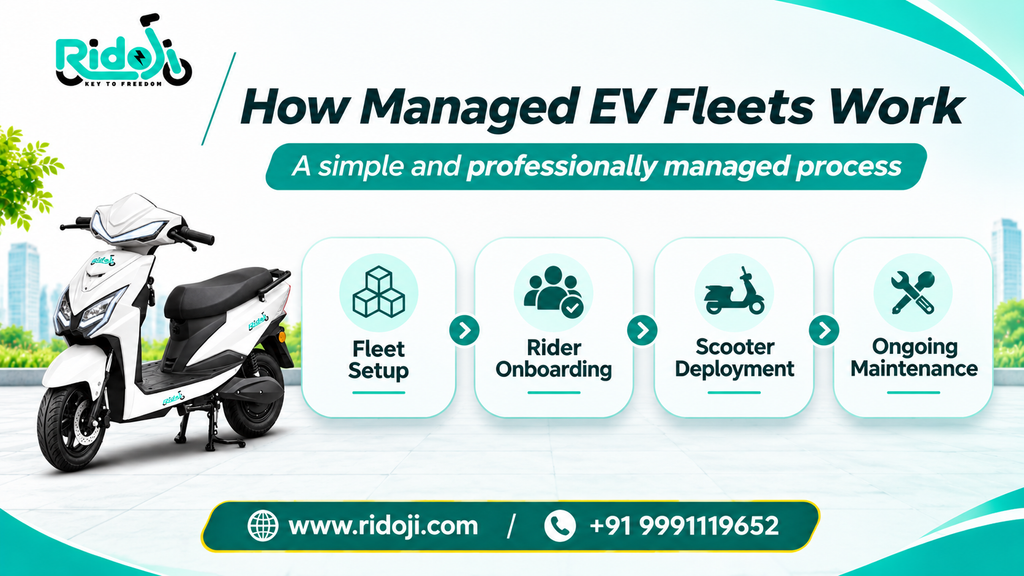
Businesses such as Ridoji are active within the EV and business fleet sectors. Their services include electric scooter deployment, rider management, and maintenance, together with business fleet services. These examples demonstrate how the EV industry is broadening to encompass areas other than manufacturing and personal vehicle provision.
Entrepreneurs can thus seek to capitalize on the rising demand for structured EV provision.
Current Challenges for India’s EV Industry
Despite the positive developments, India’s EV industry still faces several challenges. Addressing these issues will be important for long-term growth.
| Challenge | Impact on the industry |
| High upfront vehicle cost | Can make EVs less affordable for some customers |
| Charging infrastructure gaps | May limit adoption in certain locations |
| Battery replacement costs | Can increase long-term ownership expenses |
| Charging time | May affect commercial vehicle utilisation |
| Range limitations | Can restrict certain long-distance applications |
| Service and maintenance network | Can influence customer confidence and vehicle uptime |
The industry will need continued improvements in affordability, battery technology, charging access, and after-sales support to make electric mobility more accessible.
Future of India’s EV industry (2027-2030)
India’s EV industry appears well-placed for further development. Ongoing growth is anticipated in areas of EV technology, together with charging points and EV fleet provision for businesses. The rate of this progression will be affected by factors including affordability, infrastructure, and consumer issues.
Between 2027 and 2030, there will likely be further innovations and developments in:
EV affordability: Greater competition and production capability may enable additional vehicle options to become available across various price ranges.
Battery innovation: Enhanced battery efficiency, strength, and recharging effectiveness may further bolster the viability of EVs.
Charging points: Additional public and/or private charging points may be established, thereby further improving access to, for example, both personal and business charging.
Business EV fleets: Delivery, logistics, and other businesses may continue to investigate the possibilities of business EV fleets.
EV-associated businesses: Businesses offering EV rental, leasing, fleet, charging, and/or battery provision may present entrepreneurial prospects.
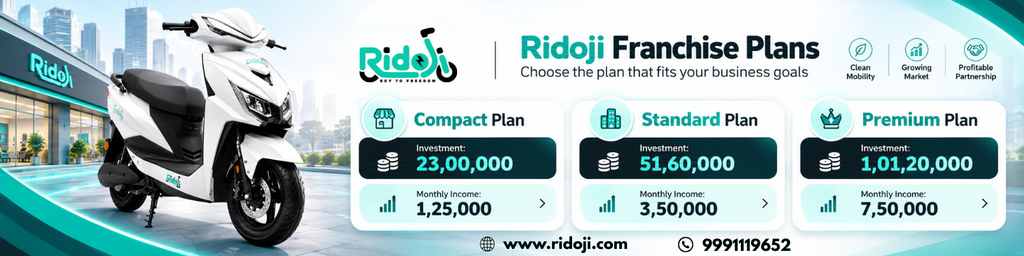
Entrepreneurs looking to enter the electric mobility sector through an established business framework can also explore the EV franchise model, which may include electric scooter rentals, fleet operations, and related mobility services.
According to a NITI Aayog and Rocky Mountain Institute report referenced by the Press Information Bureau in 2019, successful implementation of supportive policies could help India achieve EV sales penetration of 80% for two- and three-wheelers, 70% for commercial cars, 30% for private cars, and 40% for buses by 2030.
EV Industry Opportunities and Challenges
| Opportunities | Challenges |
| Electric scooter rentals | High initial investment |
| Commercial EV fleets | Vehicle utilization |
| Charging infrastructure | Setup and operating costs |
| Battery technology | Battery replacement expenses |
| EV leasing and fleet management | Maintenance and service availability |
| Last-mile delivery | Charging time and range |
How Ridoji Supports India’s Growing EV Fleet Ecosystem
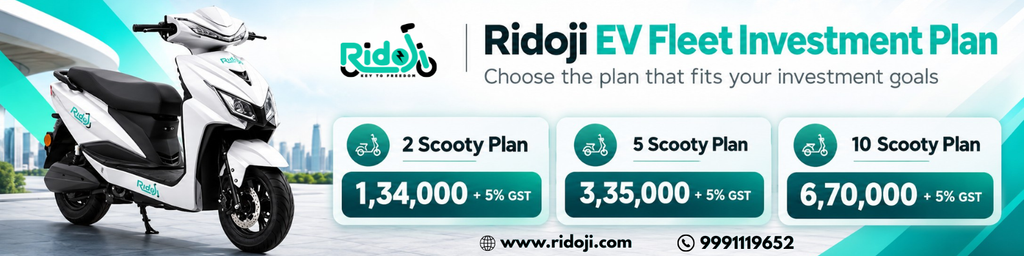
As India’s electric vehicle industry expands, commercial EV fleet management is becoming an important part of the electric mobility ecosystem.
Ridoji operates a managed EV fleet model focused on electric scooter deployment, rider onboarding, vehicle maintenance, and fleet operations. Through its EV rental and fleet management services, Ridoji supports the growing need for structured electric mobility solutions.
For entrepreneurs exploring EV business opportunities, professionally managed fleet models provide an alternative to independently handling every aspect of vehicle operations. Explore Ridoji’s EV Fleet Management Program
Conclusion
The EV industry in India is undergoing a significant transformation, driven by rising fuel costs, government support, battery innovation, expanding charging infrastructure, environmental awareness, and the growing demand for commercial electric vehicles.
As India moves towards a more sustainable transportation ecosystem, the electric vehicle industry is creating business opportunities beyond vehicle manufacturing and retail. Emerging sectors such as EV scooter rentals, EV fleet management, vehicle leasing, and EV franchises are opening new avenues for entrepreneurs and investors.
However, building a sustainable EV business requires careful evaluation of market demand, vehicle utilisation, operational costs, infrastructure availability, and long-term business risks.
With its professionally managed electric scooter deployment, rider onboarding, maintenance, and fleet operations, Ridoji is contributing to India’s growing commercial electric mobility ecosystem.
As the EV industry continues to evolve towards 2030, businesses that combine technological innovation, efficient operations, and customer-focused solutions will be better positioned to benefit from this transformation.
Explore Ridoji’s EV Fleet Management Program to learn how you can participate in India’s expanding electric mobility ecosystem.
Frequently Asked Questions (FAQs)
What are the key factors influencing growth in India’s EV industry?
Important areas include fuel price, government support, technology, environmental awareness, charging points, and business EV fleet interests.
Which EV sector is experiencing growth in India?
Two- and three-wheelers are especially significant within India’s EV industry. They are commonly used for personal, passenger, and last-mile transport.
How does the Government support EV uptake in India?
Through schemes such as the PM E-DRIVE Scheme, the Government is supporting EV growth, charging point availability, and the domestic EV manufacturing environment. Again, incentives will depend on vehicle sub-sector and scheme eligibility conditions.
What business opportunities exist in India’s EV industry?
Entrepreneurs may wish to engage in EV retailing, scooter rental, business EV fleet investment, leasing, and charging point and fleet provision.
What is the future for India’s EV industry?
Further progress is anticipated in EV technology, charging points, and business EV fleets. The speed of such advancement will depend on factors including affordability, infrastructure, and consumer issues.