
The conversation around investing in EV opportunities has evolved significantly over the past few years. What was once viewed primarily as an environmental movement has now become a practical business trend driven by economics, technology, and changing consumer behaviour. Across India’s major metro cities, the demand for fast, reliable, and affordable delivery services continues to grow. From food delivery and grocery fulfilment to courier services and e-commerce logistics, millions of deliveries take place every day.
This rapid growth has created a strong need for cost-efficient transportation solutions. For delivery riders, vehicle expenses directly impact their earnings. For businesses, transportation costs affect profitability and scalability. This is where electric scooters are making a meaningful difference.
As more riders and businesses adopt electric mobility, many individuals are exploring the potential of investing in EV assets that support this expanding ecosystem. Electric scooters are no longer just an alternative mode of transportation; they are becoming an important part of India’s urban delivery infrastructure.
In metro cities where traffic congestion, rising fuel prices, and increasing delivery volumes are everyday realities, EV scooters are proving to be a practical and economical solution. Understanding why they are gaining popularity can help both businesses and individuals better understand the opportunities associated with investing in EV technology and commercial EV deployment.
Why Investing in EV Makes Sense in India’s Metro Cities
Metro cities provide the ideal environment for electric scooter adoption. Cities such as Delhi NCR, Mumbai, Bengaluru, Hyderabad, Chennai, Pune, and Kolkata experience high delivery demand, dense populations, and significant daily commuting distances.
These factors create conditions where electric scooters can deliver substantial economic benefits.
When considering investing in EVs, it is important to understand that vehicle utilization plays a major role in determining value. The more frequently a vehicle is used, the greater the potential impact of lower operating costs.
Delivery riders often spend entire days on the road, making dozens of deliveries while covering long distances. In such situations, even small reductions in operating expenses can result in significant savings over time.
Metro cities also continue to expand their EV charging infrastructure. Public charging stations, private charging solutions, and workplace charging facilities are becoming more common, making EV ownership increasingly convenient.
As urban mobility continues to evolve, many experts believe that metro cities will remain at the forefront of EV adoption, creating long-term opportunities for businesses and individuals interested in investing in EV assets.
India’s transition towards electric mobility can also be evaluated through official vehicle registration data. Readers exploring the growth of electric two-wheelers can refer to the VAHAN Dashboard to examine EV registration patterns across different states and regions. However, overall EV registration growth does not automatically establish commercial rental demand in every city.
These factors create conditions where electric scooters can deliver substantial economic benefits.
Lower Daily Operating Costs
One of the strongest arguments for investing in EV scooters is the significant reduction in daily operating expenses compared to traditional petrol-powered vehicles.
For delivery riders, operating costs can consume a substantial portion of monthly earnings. Fuel expenses alone often represent one of the highest recurring costs.
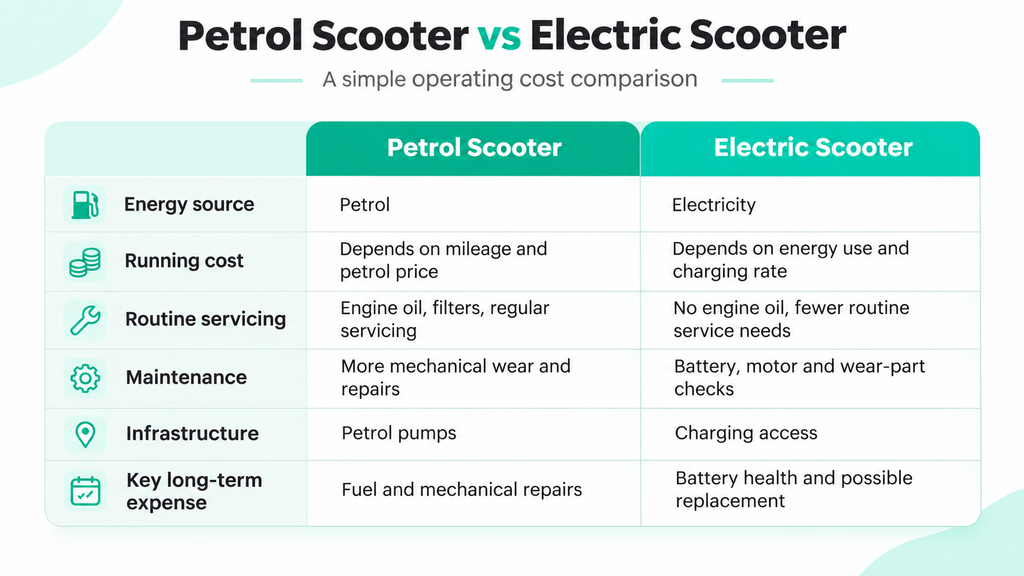
Electric scooters offer a different cost structure.
Instead of depending on petrol, riders charge their vehicles using electricity, which generally costs less per kilometre travelled. While exact savings vary depending on usage patterns, local electricity rates, and charging habits, the overall economics frequently favour electric mobility.
For delivery operations involving high daily mileage, the difference becomes even more noticeable.
A rider travelling 100 kilometres every day will experience far greater cost savings than someone who only uses a scooter occasionally. This is one reason why commercial applications have become a major driver of EV adoption.
The relationship between vehicle utilization and operating costs is also why many analysts see commercial deployment as a compelling case for investing in EV infrastructure and assets.
Electric scooters offer a different cost structure.
| Cost factor | Petrol scooter | Electric scooter |
|---|---|---|
| Energy source | Petrol | Electricity |
| Running cost | Depends on mileage and petrol price | Depends on energy consumption and charging rate |
| Routine servicing | Engine oil, filters, and other servicing | No engine oil; battery and electrical system checks |
| Maintenance | Engine and mechanical components | Battery, motor, electronics, and wear components |
| Infrastructure | Petrol pumps | Charging access |
| Key long-term expense | Fuel and mechanical repairs | Battery condition and potential replacement |
Reduced Maintenance Requirements
Another important factor supporting investing in EV scooters is their relatively simple mechanical design.
Traditional petrol scooters contain numerous moving parts that require routine maintenance and servicing. Components such as engine oil systems, spark plugs, filters, clutch assemblies, and exhaust systems require ongoing attention throughout the vehicle’s lifecycle.
Electric scooters eliminate many of these components.
As a result, riders often experience:
- Fewer maintenance requirements
- Reduced servicing frequency
- Lower repair costs
- Less vehicle downtime
- Simplified maintenance schedules
For delivery riders, downtime can directly affect earning potential. Every hour spent waiting for repairs is time that cannot be used for deliveries.
Businesses managing fleets also benefit from predictable maintenance schedules and reduced operational disruptions.
These advantages strengthen the business case for investing in EV solutions designed for commercial applications.
Why Delivery Riders Are Switching to Electric Scooters
Delivery riders are among the earliest large-scale adopters of electric scooters because they experience the financial impact of vehicle expenses every day.
A rider working full-time in a metro city often faces challenges such as:
- Rising fuel prices
- Heavy traffic conditions
- Frequent vehicle wear and tear
- Long daily travel distances
- Increasing maintenance expenses
Electric scooters help address many of these concerns.
Lower running costs can improve overall profitability. Reduced maintenance can decrease unexpected expenses. Smooth acceleration and easier manoeuvrability can improve the riding experience in congested urban environments.
Because of these advantages, many riders are becoming strong advocates for EV adoption.
This growing rider demand contributes to the broader trend of investing in EV infrastructure, fleets, and mobility solutions across India’s urban markets.
How EV Fleets Support Last-Mile Delivery
The rapid growth of e-commerce and food delivery services has increased demand for efficient last-mile transportation.
Last-mile delivery refers to the final stage of the delivery process, where goods are transported from distribution centers or local hubs to customers.
This stage is often the most expensive and operationally complex part of logistics.
Businesses are constantly searching for ways to improve efficiency while controlling costs. Electric scooters have emerged as a practical solution because they combine affordability, reliability, and suitability for urban environments.
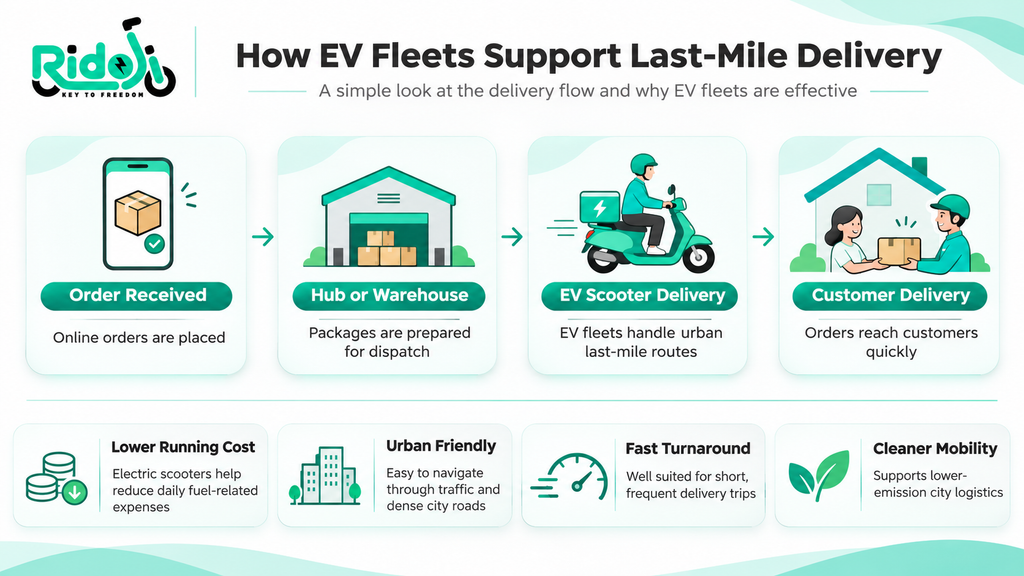
For companies managing hundreds or thousands of deliveries daily, even modest reductions in operating costs can generate meaningful savings.
This is one reason why fleet operators are increasingly participating in investing in EV programs and expanding electric vehicle deployments.
As delivery volumes continue to rise, EV fleets are expected to play a growing role in urban logistics networks.
For a broader perspective on the electric vehicle market, the International Energy Agency’s Global EV Outlook 2026 provides analysis of electric mobility trends, market developments, and policy conditions. These insights offer useful industry context, although local delivery fleet economics must be assessed separately.
The rapid growth of e-commerce and food delivery services has increased demand for efficient last-mile transportation.
How Investing in EV Fleet Assets Works
When people hear the phrase investing in EVs, they often think about purchasing shares of EV manufacturers or related companies.
However, another approach involves participation in physical EV assets that contribute to commercial transportation operations.
Electric scooters deployed within delivery fleets represent productive assets that support daily business activity.
These vehicles help riders complete deliveries, assist businesses in meeting customer expectations, and contribute to the overall efficiency of urban logistics systems.
The concept is similar to investing in infrastructure that supports economic activity.
As EV adoption continues to expand, demand for commercially utilized electric scooters may continue to grow, particularly in regions where delivery services are experiencing strong expansion.
This broader perspective highlights how investing in EV opportunities can extend beyond vehicle manufacturing and into practical operational applications.
How Managed EV Fleet Investment Programs Work
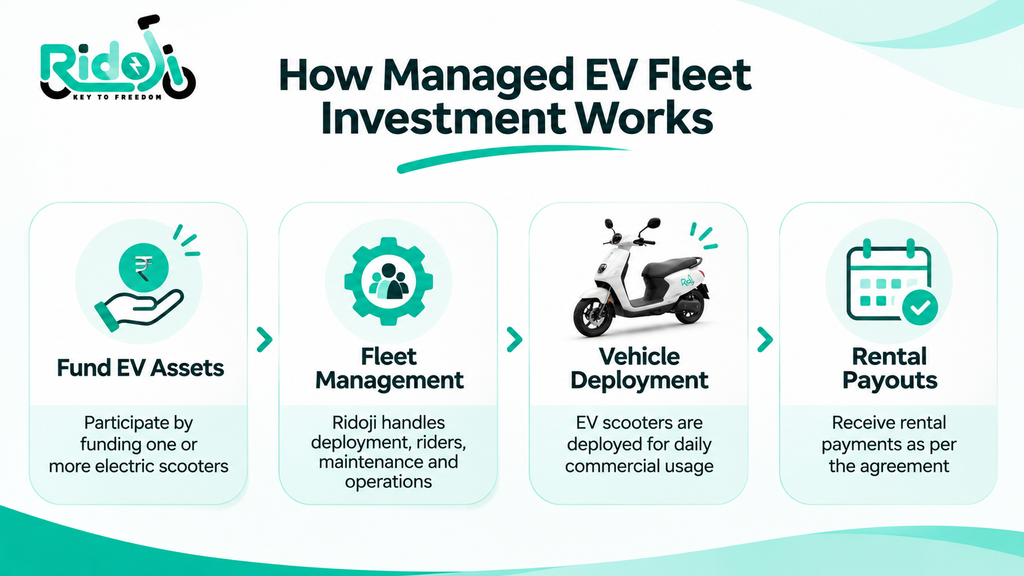
Managed EV fleet programs provide a way for individuals to participate in the commercial electric mobility ecosystem without independently managing daily vehicle operations.
In a typical asset-based arrangement, an individual funds one or more electric scooters, while a fleet management company handles the operational responsibilities.
These responsibilities may include:
- Deploying electric scooters to riders.
- Coordinating vehicle rentals and collections.
- Managing routine maintenance and servicing.
- Monitoring vehicle usage and operational performance.
- Managing rental-related payments according to the agreement.
Ridoji’s EV Fleet Management Program is an example of this operational approach, where vehicle deployment, rider management, and fleet-related activities are handled by the company.
However, before participating in any such program, individuals should carefully review the agreement, vehicle ownership terms, payment obligations, maintenance responsibilities, and associated financial risks.
Environmental Benefits of Electric Scooters
While economics often drive adoption decisions, sustainability remains an important factor.
Many businesses are actively seeking ways to reduce emissions and improve environmental performance.
Electric scooters can contribute to these goals by reducing dependence on fossil fuels and supporting cleaner urban transportation systems.
Consumers are also becoming more aware of sustainability issues. Businesses that adopt environmentally responsible practices may strengthen their brand image and appeal to environmentally conscious customers.
For organisations balancing operational efficiency with sustainability objectives, electric mobility provides a practical pathway.
This combination of economic and environmental benefits continues to support interest in investing in EV technologies and infrastructure.
Risks and Considerations Before Investing in EVs
Although there are compelling reasons for investing in EV assets, it is important to evaluate opportunities carefully.
Several factors should be considered:
Battery Performance
Battery technology is continually improving, but battery health remains an important consideration for long-term vehicle performance.
Fleet Utilization
Commercial success often depends on consistent vehicle deployment and high utilization rates.
Operational Management
Effective fleet management can significantly influence outcomes.
Charging Accessibility
Access to reliable charging infrastructure remains an important factor in operational efficiency.
Market Conditions
Local delivery demand, economic trends, and regulatory developments can influence adoption rates and business performance.
Evaluating these factors helps create a more informed understanding of any investment in an EV opportunity.
The Future of Investing in EV for Delivery and Fleet Operations
India’s EV ecosystem continues to evolve at a rapid pace.
Government initiatives, improving technology, growing charging infrastructure, and increasing consumer acceptance are helping accelerate adoption across multiple sectors.
Delivery services remain one of the strongest use cases for electric scooters because of their high utilization rates and cost-sensitive operating environment.
As businesses continue searching for ways to improve efficiency, electric mobility is likely to play an increasingly important role in urban logistics.
For individuals exploring investing in EVs, commercial delivery fleets represent a segment worth monitoring due to their practical demand drivers and measurable economic benefits.
Metro cities are expected to remain central to this growth because they combine high delivery volumes, strong demand for mobility solutions, and expanding EV infrastructure.
These factors create an environment where electric scooters can continue delivering value for riders, businesses, and stakeholders throughout the mobility ecosystem.
Government initiatives have also contributed to the development of India’s electric mobility ecosystem. The PM E-DRIVE Scheme provides information about national electric mobility initiatives and eligible vehicle categories. Investors and businesses should review the latest scheme conditions and applicable eligibility requirements before making financial decisions.
Government initiatives, improving technology, growing charging infrastructure, and increasing consumer acceptance are helping accelerate adoption across multiple sectors
Conclusion: Why Investing in EV Scooters Is Becoming Increasingly Relevant
The growth of India’s delivery economy is creating new opportunities across the electric mobility landscape.
Electric scooters offer lower running costs, reduced maintenance requirements, operational efficiency, and suitability for dense urban environments. These advantages have made them increasingly popular among delivery riders and businesses operating in metro cities.
As adoption continues to grow, interest in investing in EV assets is also increasing. Whether viewed through the lens of commercial transportation, fleet deployment, urban logistics, or sustainable mobility, electric scooters are becoming an important component of modern delivery operations.
For anyone researching investing in EV opportunities, understanding the economics behind delivery-focused electric scooters provides valuable insight into one of the fastest-growing segments of India’s mobility sector.
The combination of rising delivery demand, improving EV infrastructure, and increasing focus on operational efficiency suggests that electric scooters will continue to play a significant role in shaping the future of urban transportation and last-mile delivery across India’s major cities.
Frequently Asked Questions (FAQs)
1. Is investing in EV scooters a good business opportunity in India?
EV scooters may offer commercial opportunities through rental and fleet operations. Financial outcomes depend on rental demand, fleet utilization, operating costs, asset condition, and the contractual arrangement.
2. How can I invest in an EV fleet without managing vehicles?
Some managed fleet programs allow participants to fund EV assets while a fleet operator manages vehicle deployment, rider coordination, and maintenance. The exact responsibilities depend on the agreement.
3. What are the main risks of investing in EV assets?
Important risks include low utilization, battery degradation, maintenance expenses, delayed payments, counterparty risk, and changes in local market conditions.
4. Why are electric scooters suitable for delivery operations?
Electric scooters can have lower energy costs per kilometre, fewer engine-related maintenance needs, and practical advantages for frequent short-distance travel.
5. Can EV rental businesses generate monthly cash flow?
Yes, an EV rental business can collect recurring rental payments when vehicles are deployed under paying rental arrangements. Net cash flow depends on actual collections, expenses, and contractual obligations.
6. What should I check before joining an EV fleet investment program?
Review asset ownership, payout terms, vehicle utilization, insurance, maintenance costs, taxation, exit conditions, and the fleet operator’s financial and operational record.