

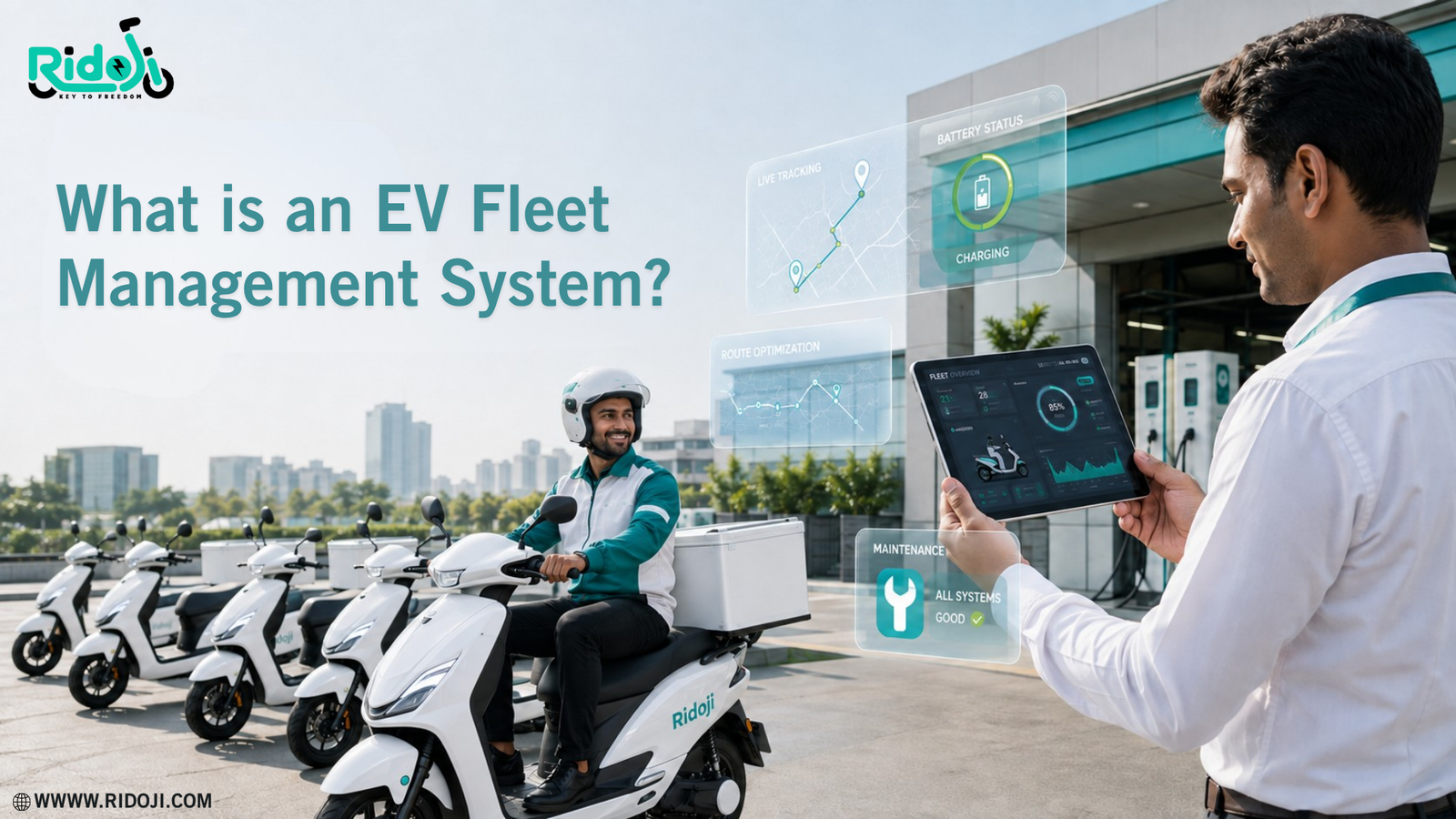
Electric vehicles are becoming increasingly common in delivery, logistics, employee transportation and other commercial operations. However, managing multiple electric vehicles involves much more than simply purchasing them and putting them on the road.
Businesses need to track vehicles, monitor battery levels, schedule charging, manage riders and plan maintenance. This is where EV fleet management becomes important.
What Is EV Fleet Management?
EV fleet management is the process of monitoring, operating and maintaining a group of electric vehicles. These vehicles may include electric scooters, cars, vans or commercial vehicles used for deliveries and transportation.
An EV fleet management system brings important information onto a single platform. It helps fleet operators understand:
- Where each vehicle is located
- How much battery charge is available
- Whether a vehicle requires maintenance
- How efficiently each vehicle is being used
- Which rider or driver is operating it
- When and where the vehicle should be charged
In simple words, it helps businesses keep their electric fleet organised, productive and ready for everyday operations.
How Does an EV Fleet Management System Work?
An electric fleet management system collects real-time information from vehicles using GPS, telematics and connected software. Fleet managers can view this information through a fleet management dashboard.
For example, a delivery company operating 100 electric scooters can use EV fleet tracking software to check vehicle locations, battery status and daily usage. If a scooter has a low battery or requires servicing, the system can alert the operations team.
This allows the business to solve problems before they affect deliveries.
Important Features of EV Fleet Management Software
1. Real-Time Fleet Monitoring
Real-time fleet monitoring allows businesses to see where their vehicles are and whether they are active, parked or charging.
An EV fleet tracking system can also help identify route delays, unauthorised vehicle use and vehicles that remain unused for long periods.
2. Battery Health Monitoring
The battery is one of the most important components of an electric vehicle. An EV battery monitoring system tracks information such as:
- Current battery level
- Charging status
- Battery temperature
- Energy consumption
- Battery performance and health
Regular battery health monitoring can help prevent unexpected vehicle downtime and support better battery life.
3. EV Charging Management
Unlike fuel-powered vehicles, EVs require planned charging. If charging is not managed properly, vehicles may be unavailable when they are needed most.
An EV charging management system helps operators schedule charging, monitor charging sessions and manage energy consumption. It can also support charging schedule optimisation, ensuring that vehicles are charged according to operational requirements.
4. Vehicle Maintenance Management
Electric vehicles generally have fewer moving parts than traditional vehicles, but regular inspections and servicing are still necessary.
Fleet maintenance software keeps records of servicing, repairs and vehicle condition. It can send reminders when tyres, brakes, batteries or other components need attention.
Some platforms also support predictive maintenance for EVs, using vehicle data to identify possible issues before they become expensive problems.
5. Route Planning and Optimisation
Poor route planning can increase battery consumption and reduce the number of trips completed each day.
Route planning and optimisation helps businesses select efficient routes based on distance, traffic, battery range and delivery locations. This is especially useful for an EV fleet used for last-mile delivery.
6. Rider and Driver Management
Vehicles are only one part of fleet operations. Businesses must also manage the people operating them.
An EV fleet management platform can maintain rider records, assign vehicles, monitor driving patterns and track daily performance. Better rider and driver management can improve road safety and operational accountability.
Benefits of EV Fleet Management
Improved Vehicle Utilisation
Fleet utilisation tracking shows how frequently each vehicle is being used. This helps operators identify underused vehicles and distribute work more effectively.
Reduced Operational Costs
An efficient system can support fleet operating cost reduction by improving routes, reducing downtime, managing charging and preventing major maintenance issues.
Better Operational Control
A single dashboard gives operators a clear view of the entire fleet. Instead of depending on phone calls and manual records, they can make decisions using real-time information.
Fewer Unexpected Breakdowns
Regular monitoring and maintenance alerts help businesses address smaller issues before they interrupt operations.
More Reliable Deliveries
For logistics companies, vehicle availability directly affects delivery performance. Better battery planning and route management help riders complete more trips with fewer interruptions.
More Sustainable Operations
Electric vehicles can help organisations move towards a zero-emission fleet. When combined with efficient fleet management, they support cleaner and more responsible commercial transportation.
EV Fleet Management for Last-Mile Delivery
The last-mile delivery sector is one of the biggest users of electric two-wheelers. Delivery riders travel throughout the day, which makes battery availability, maintenance and vehicle reliability extremely important.
An electric scooter fleet management system can help delivery businesses:
- Assign scooters to riders
- Track vehicles through GPS
- Monitor battery levels
- Plan charging or battery swapping
- Schedule preventive maintenance
- Measure daily vehicle utilisation
- Reduce operational downtime
This makes EV fleet management for last-mile delivery useful for food delivery, grocery delivery, e-commerce and hyperlocal logistics companies.
What Is Fleet Electrification?
Fleet electrification is the process of replacing petrol or diesel vehicles with electric alternatives. It involves more than purchasing EVs. Businesses must also plan charging infrastructure, vehicle deployment, energy requirements and maintenance.
A reliable EV fleet management solution makes this transition easier by providing the data and tools required to operate electric vehicles efficiently.
Choosing an EV Fleet Management Solution
Before selecting an EV fleet management company in India, businesses should consider:
- Real-time GPS tracking
- Battery and charging monitoring
- Maintenance support
- Rider management
- Route optimisation
- Reporting and analytics
- Scalability
- Customer and operational support
The right solution should match the size of the fleet and the organisation’s daily requirements.
How Ridoji Supports EV Fleet Operations
Ridoji provides a managed EV fleet ecosystem for commercial and last-mile delivery operations. Its team handles important areas such as fleet deployment, rider management, vehicle maintenance, quality checks and day-to-day operations.
This approach helps businesses access organised electric mobility solutions without having to manage every operational responsibility independently.
Conclusion
EV fleet management connects vehicles, riders, batteries, charging and maintenance into one organised system. It gives businesses better visibility and helps them operate electric vehicles more efficiently.
As electric mobility continues to grow, an effective EV fleet management system will play an important role in reducing downtime, improving fleet performance and building more sustainable transportation networks.
For managed EV fleet solutions, visit www.ridoji.com or call 9991119652.
Frequently Asked Questions About EV Fleet Management
1. What is an EV fleet management system?
An EV fleet management system is a platform that helps businesses monitor and manage multiple electric vehicles. It brings vehicle location, battery status, charging, maintenance, routes and driver information together in one place.
2. Why is EV fleet management important?
EV fleet management helps businesses reduce vehicle downtime, plan charging, improve route efficiency and keep vehicles properly maintained. It also gives fleet managers better control over everyday operations.
3. How does EV fleet tracking work?
An EV fleet tracking system uses GPS and telematics to share real-time vehicle information. Fleet managers can check each vehicle’s location, movement, usage and operational status through a central dashboard.