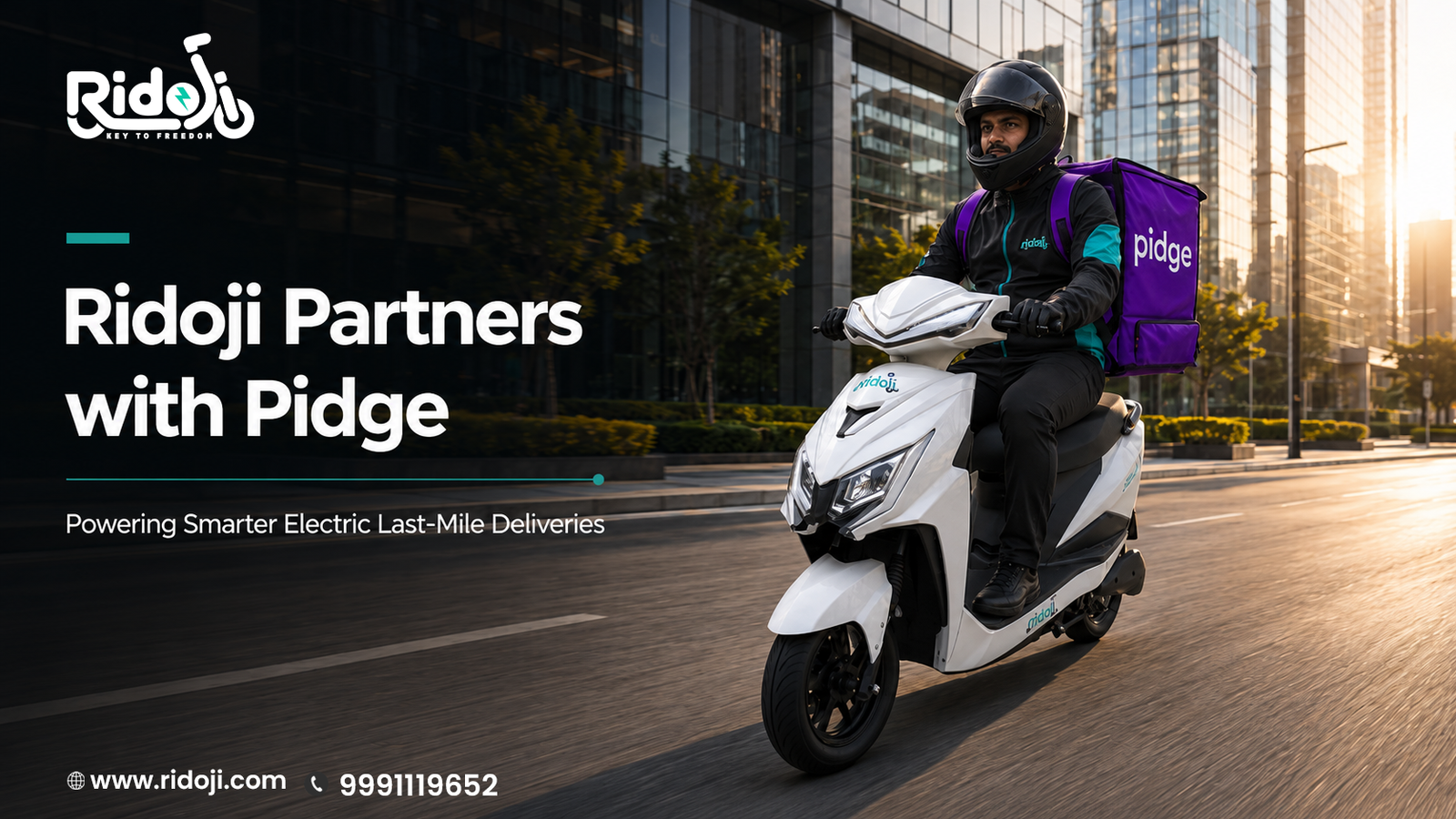
Electric last-mile delivery is rapidly transforming how businesses manage urban logistics, fulfil orders, and build more sustainable delivery operations. To support this shift, Ridoji has partnered with Pidge to combine smart logistics technology with Ridoji’s managed electric scooter fleet and rider operations.
Understanding the Ridoji and Pidge Collaboration
The collaboration is built around a simple but powerful operating model.
Delivery platforms generate customer orders. Pidge connects with these platforms through agreed technology integrations and receives eligible delivery requirements.
Pidge then manages the allocation of these orders through its logistics system.
Once an order is assigned to Ridoji, a Ridoji rider completes the delivery using a Ridoji electric scooter.
The delivery flow can be understood as:
Customer places an order → Delivery platform generates the order → Pidge receives and allocates the order → Ridoji rider completes the delivery using a Ridoji electric scooter
This connected model brings technology, fleet management and delivery execution into one organised workflow.
The Role of Pidge
Pidge acts as the technology and order-allocation layer within the delivery process.
Depending on its agreements with delivery platforms and businesses, Pidge can receive eligible delivery orders through API integrations and allocate those orders to its logistics and fleet partners.
In this collaboration, Pidge supports areas such as:
- Order integration
- Delivery-order allocation
- Rider assignment
- Delivery tracking
- Operational visibility
- Performance monitoring
- Logistics coordination
This technology layer helps reduce manual order handling and creates a structured system through which delivery requirements can be assigned to available riders.
How Zomato Orders Fit into the Model
Under Pidge’s agreement and API integration with Zomato, eligible delivery orders can be received by Pidge and assigned to logistics partners such as Ridoji.
The working process is:
- A customer places an order through Zomato.
- The delivery requirement is generated within Zomato’s system.
- Pidge receives the eligible order through its agreed API integration.
- Pidge allocates the delivery order to a Ridoji rider.
- The Ridoji rider collects and delivers the order using a Ridoji electric scooter.
- Delivery progress and completion are recorded through the connected logistics system.
This means that Pidge acts as the technology bridge, while Ridoji provides the electric fleet and delivery execution.
It is important to understand that Ridoji’s operational relationship is with Pidge. Delivery orders may originate from platforms integrated with Pidge, including Zomato, subject to their respective commercial agreements.
Why This Collaboration Matters
The delivery ecosystem often involves multiple disconnected elements:
- Order platforms
- Logistics technology
- Fleet providers
- Riders
- Vehicle maintenance
- Delivery tracking
- Operational reporting
When these elements are not connected properly, businesses may experience delays, low fleet utilisation and limited operational visibility.
The Ridoji and Pidge collaboration helps connect these components more effectively.
Better Order Allocation
Pidge’s technology helps organise and allocate delivery orders to available riders. This creates a more structured process than manual assignment.
Improved Fleet Utilisation
Ridoji scooters can be deployed against active delivery demand, helping improve vehicle usage and rider productivity.
Sustainable Delivery Operations
Ridoji’s electric scooters support cleaner last-mile mobility by reducing dependence on petrol-powered two-wheelers.
Reliable Delivery Execution
With riders, scooters and fleet operations managed by Ridoji, businesses gain access to a more organised delivery-execution setup.
Greater Operational Visibility
Technology-based allocation and tracking can provide better visibility into delivery status, rider activity and operational performance.
Technology Meets Electric Mobility
The strength of this collaboration lies in the combination of logistics technology and electric fleet operations.
Pidge brings the digital infrastructure required to receive, organise and allocate delivery orders.
Ridoji brings the physical delivery infrastructure required to complete those orders on the ground.
This creates a connected ecosystem where:
- Orders are generated digitally
- Delivery requirements are allocated through technology
- Riders receive structured assignments
- Electric scooters complete last-mile deliveries
- Delivery performance can be monitored
This model supports the growing need for faster and more sustainable urban delivery networks.
Benefits for Delivery Riders
Ridoji riders are an essential part of this collaboration.
Through the connected delivery ecosystem, riders can receive delivery orders in a more organised manner and complete them using managed electric scooters.
Potential rider benefits include:
- Access to delivery assignments
- Use of electric scooters for daily operations
- Reduced dependence on personal petrol vehicles
- Fleet and maintenance support
- Structured delivery workflows
- Better operational coordination
Electric scooters can also help reduce fuel-related operating costs, depending on the rider arrangement and fleet model.
Benefits for Businesses
Businesses increasingly need reliable delivery capacity without building their entire logistics infrastructure internally.
A technology-enabled managed fleet model can help businesses access:
- Delivery riders
- Electric vehicles
- Order-allocation technology
- Tracking systems
- Fleet support
- Operational coordination
This can be especially useful for:
- Food delivery
- Grocery delivery
- Quick commerce
- E-commerce
- Pharmacy delivery
- Retail fulfilment
- Hyperlocal logistics
- Scheduled delivery services
Supporting the Growth of Sustainable Last-Mile Delivery
Urban delivery demand continues to grow, but this growth also brings challenges such as fuel costs, congestion and vehicle emissions.
Electric two-wheelers can play an important role in building a more sustainable last-mile ecosystem.
By deploying Ridoji electric scooters for technology-allocated delivery orders, this collaboration supports a shift toward cleaner delivery mobility.
The objective is not only to replace petrol vehicles. It is also to build a more organised system where vehicles, riders, technology and delivery demand work together.
A Scalable Partnership Model
The Ridoji and Pidge collaboration also creates opportunities for future expansion.
As delivery demand grows, the model can potentially be expanded through:
- More Ridoji riders
- Additional electric scooters
- New delivery zones
- More business categories
- Increased order volumes
- Additional cities
- Dedicated enterprise fleets
- Peak-demand delivery support
The same technology-and-fleet framework can be adapted for different delivery requirements and industries.
What This Means for Ridoji
This partnership strengthens Ridoji’s position as a managed electric fleet and last-mile delivery operator.
Ridoji is not only providing vehicles. It is building an operational ecosystem that includes:
- Electric scooters
- Riders
- Maintenance
- Fleet supervision
- Delivery execution
- Business support
Through Pidge’s technology platform, this managed fleet can be connected with real delivery demand.
This is an important step toward making electric delivery fleets more practical, scalable and commercially useful.
What This Means for Pidge
For Pidge, the collaboration provides access to managed electric fleet capacity and riders who can execute allocated delivery orders.
This supports Pidge’s role as a logistics technology and orchestration platform.
By working with fleet partners such as Ridoji, Pidge can connect digital delivery demand with real on-ground fulfilment capacity.
Building the Future of Last-Mile Delivery
The future of logistics will depend on more than vehicles alone.
It will require:
- Smarter order allocation
- Connected delivery platforms
- Reliable fleet operators
- Trained and supported riders
- Real-time tracking
- Sustainable mobility
- Efficient ground execution
The Ridoji and Pidge collaboration brings these elements together.
Pidge connects the delivery orders through its logistics technology ecosystem.
Ridoji powers the on-ground delivery operations through its riders and managed electric scooter fleet.
Together, the partnership represents a practical step toward a smarter and more sustainable last-mile delivery network.
Conclusion
Ridoji’s collaboration with Pidge creates a connected delivery model in which technology-enabled order allocation meets managed electric fleet execution.
Through Pidge’s integrations with delivery platforms, eligible orders can be allocated to Ridoji riders, who complete the deliveries using Ridoji electric scooters.
This partnership can help improve fleet utilisation, support riders, increase operational efficiency and promote cleaner last-mile mobility.
In one simple line:
Pidge connects the orders. Ridoji powers the deliveries.